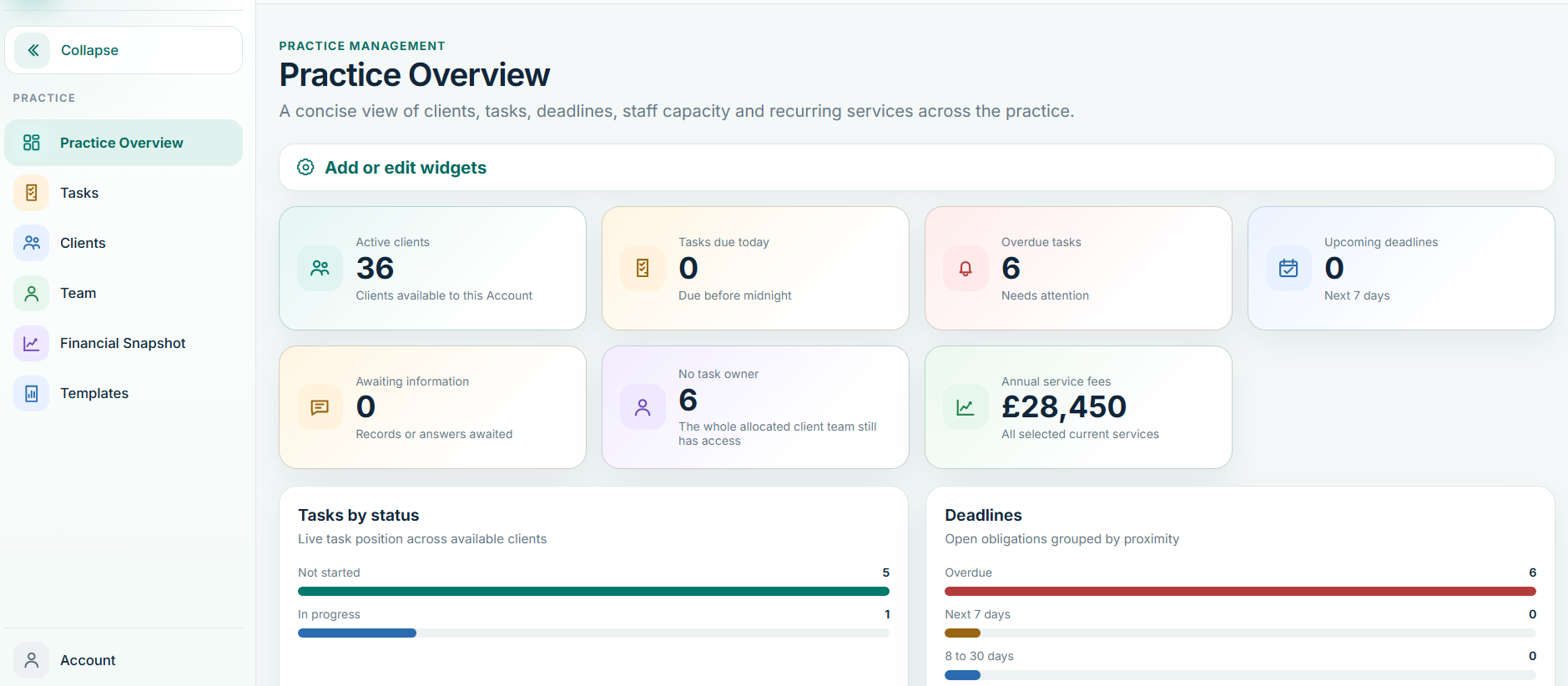
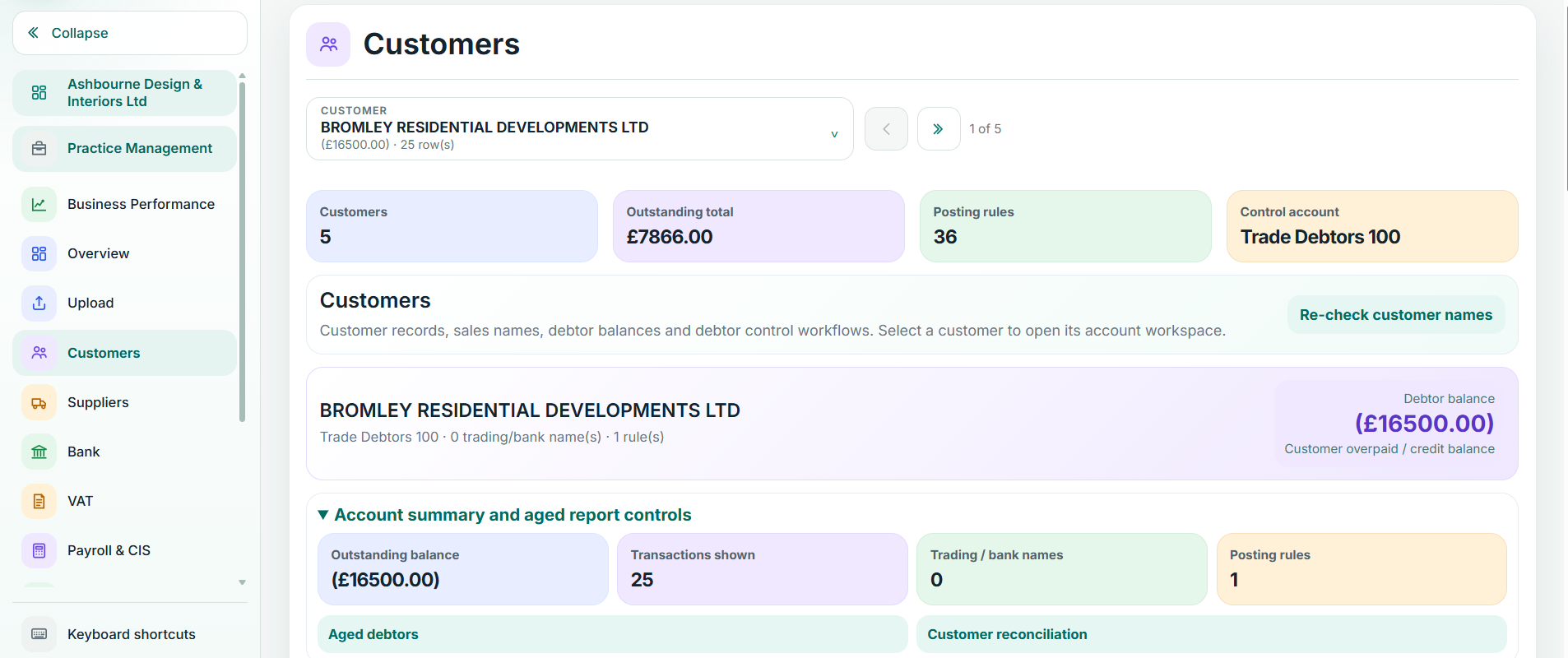
Balansix connects the operational and accounting sides of the firm so that information created at one stage can become the starting point for the next.
Balansix is built around one client record and the flow of work around it. Each part of the platform has a clear job, but the value comes from what those parts know about each other.
Clients, onboarding, engagement, work, staff, time and communication.
Explore →02Bring documents and client records into a controlled accounting-ready workflow.
Explore →03Banking, ledgers, VAT, settlements, reconciliation, schedules and reporting.
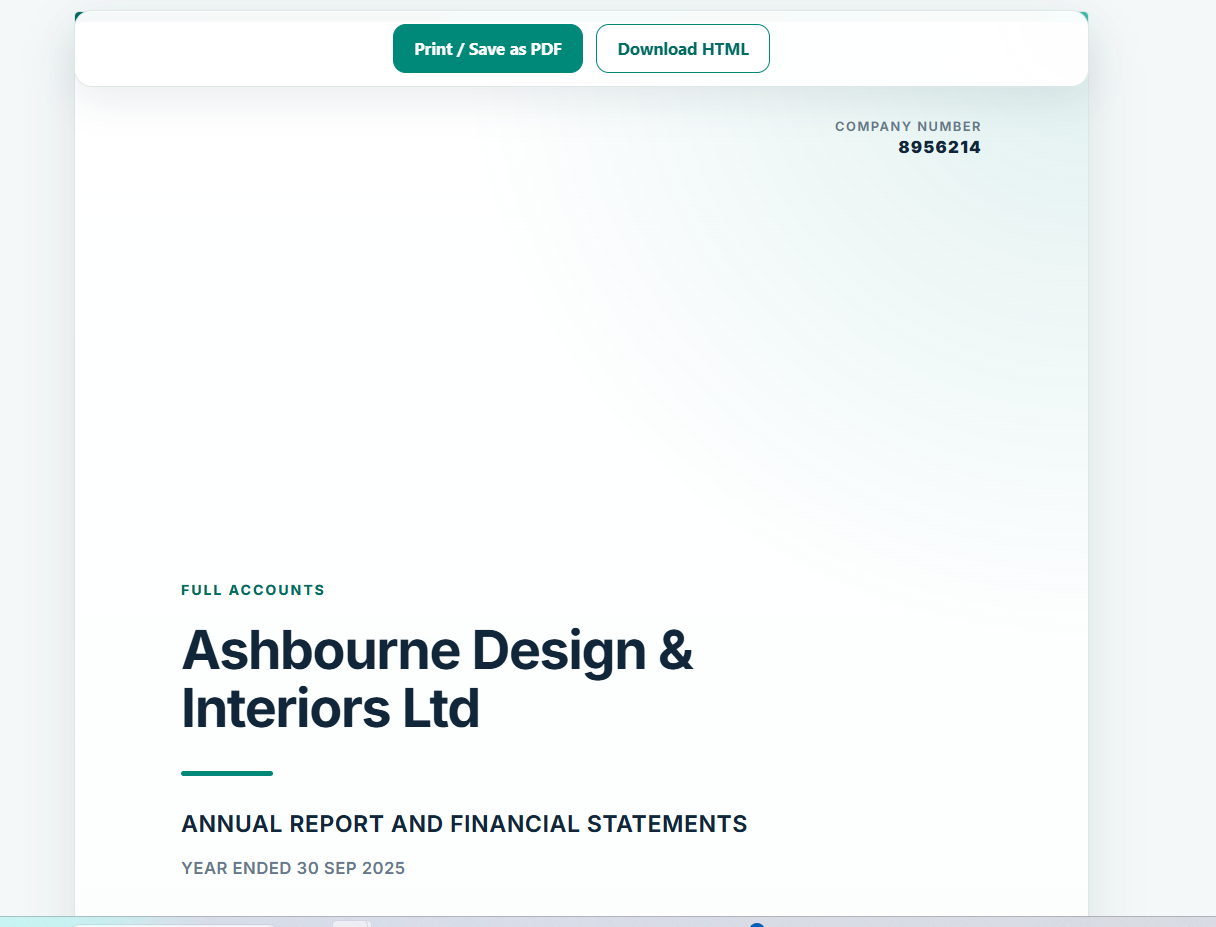
Explore →04FRS 105 and FRS 102 Section 1A accounts from the connected accounting record.
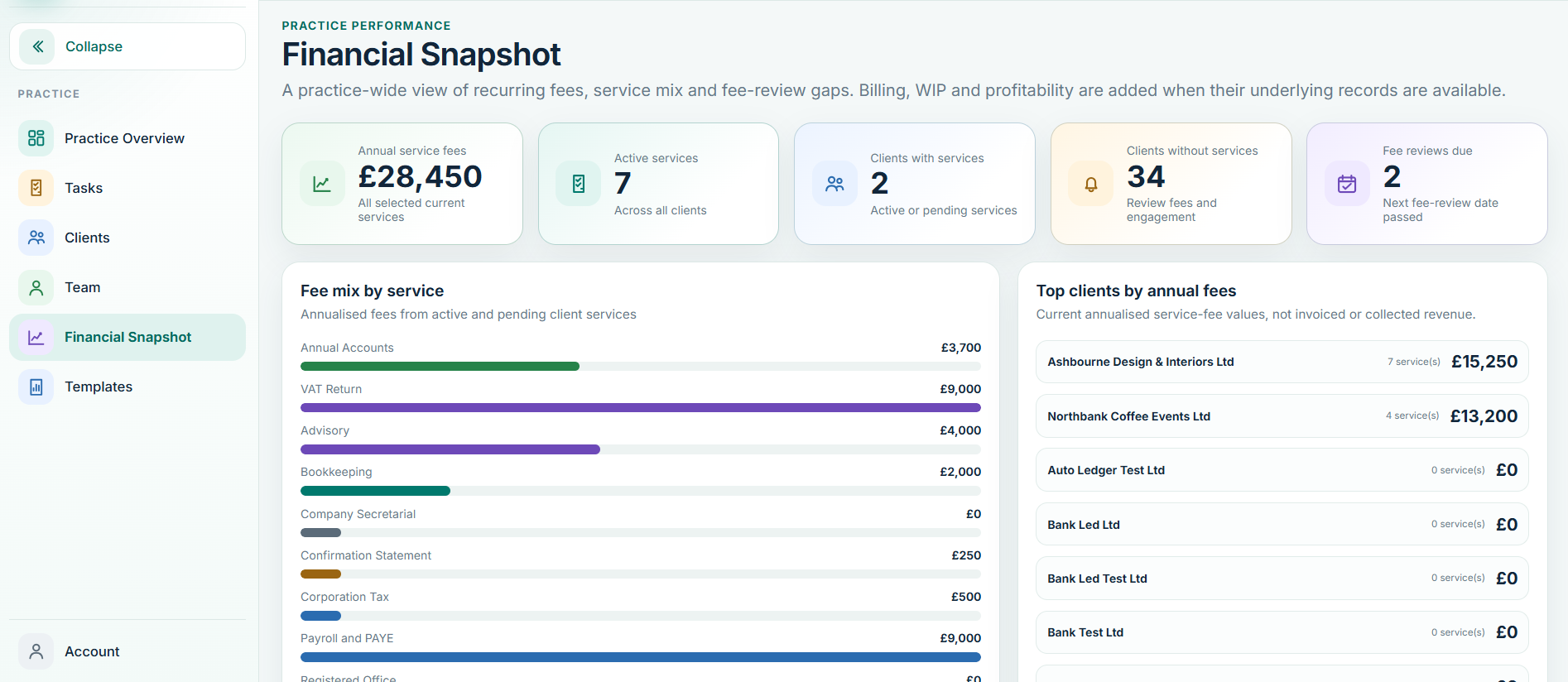
Explore →05Turn financial information into clearer analysis and client conversations.
Explore →06Role-based access, controlled workflows, audit trail and secure cloud delivery.
Explore →Practice management is not a diary sitting next to the accounting software. It is where the client relationship, agreed services, deadlines, responsibilities and team activity begin.
When the client is accepted, Balansix can carry that information forward into recurring work and the service areas used by the team. The objective is to remove the repeated setup that occurs when proposals, PM, time recording and accounting each maintain their own version of the client.


Balansix treats the live accounting record as the foundation for VAT, year-end adjustments, financial reporting and final accounts. The job should become more complete as the year moves forward, not restart when the year ends.
Two operating modes recognise that client records arrive differently. Document-Led workflows use invoices and supporting documents as the primary accounting evidence. Bank-Led workflows use bank activity as the primary record for suitable cash-based clients. Both are controlled accounting workflows rather than shortcuts around double entry.
Traditional year end often begins with an export from one product and a new import into another. Balansix is designed so the accounting source, mapping, disclosures and statutory output remain part of the same connected client workflow.
That matters when figures change. The correct response is to correct the accounting source and let the downstream output follow, rather than patching a number in an accounts-production package and creating two versions of the truth.

Balansix connects client uploads, OCR & Capture, information requests and supporting evidence with the client and accounting workflow. The objective is not simply to store documents. It is to reduce the administration between receiving a record and using it.
Give clients clear upload routes for sales, purchases, expenses and bank records so the team receives context with the file, not just an attachment.
Extract accounting-relevant information from incoming records and present it in a controlled review workflow before it reaches the books.
Keep the document, client, period and accounting workflow connected so staff spend less time sorting, renaming and re-keying.

Producing accurate accounts is essential. Helping the client understand them is where the value becomes visible.
Balansix brings the same accounting information into financial snapshots, movement analysis, ratios, trends and plain-English insight. The purpose is to help the accountant identify the points worth discussing and communicate them without rebuilding the analysis in spreadsheets and presentation software.
A feature list tells you what the software contains. The workflow tells you what your team no longer has to do.
Set up the relationship, services, fees and engagement once.
Bring client information into the right place with the right context.
Process, reconcile and build schedules against one accounting record.
Carry agreed figures into statutory output and useful client conversations.
One client. One connected record. Every stage of the work.
Bring a real client workflow to the demonstration and compare how many handoffs, re-keying points and separate systems Balansix can remove.