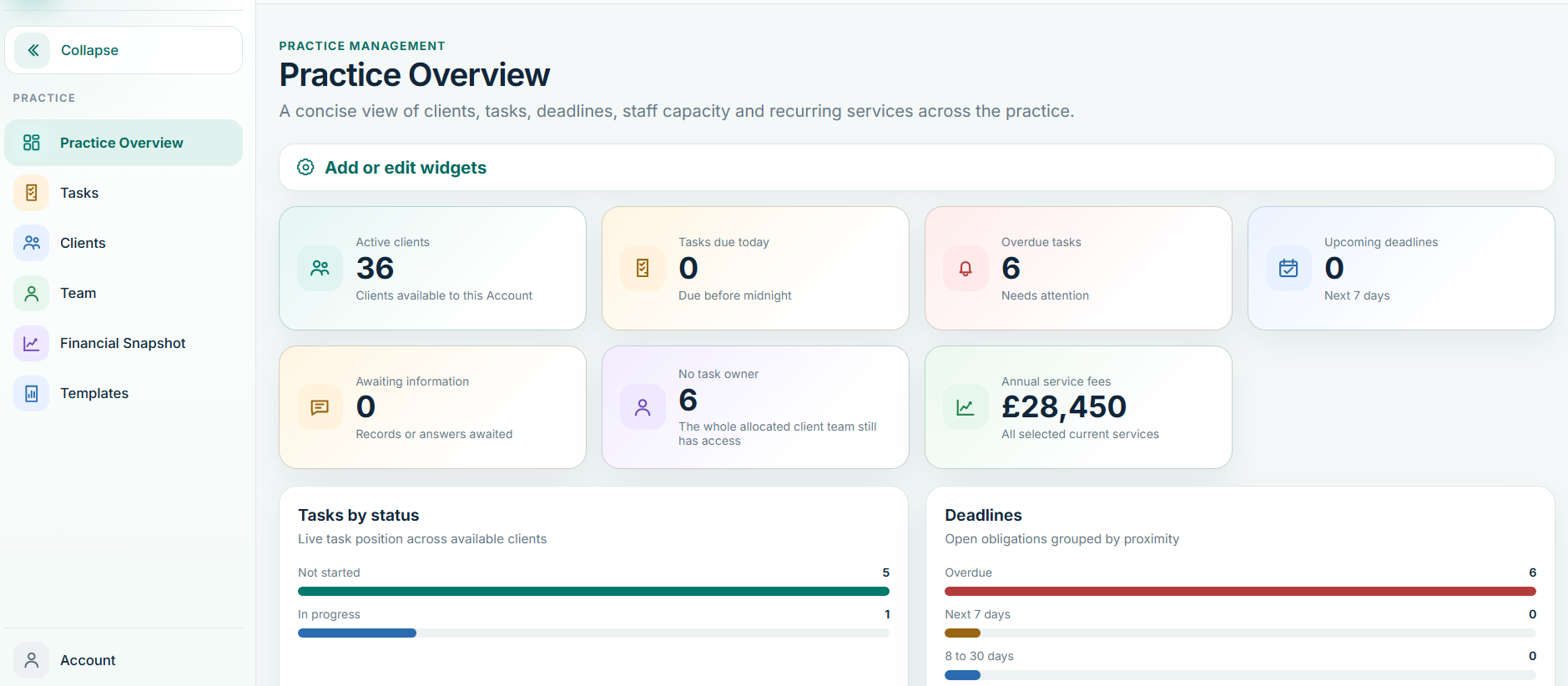
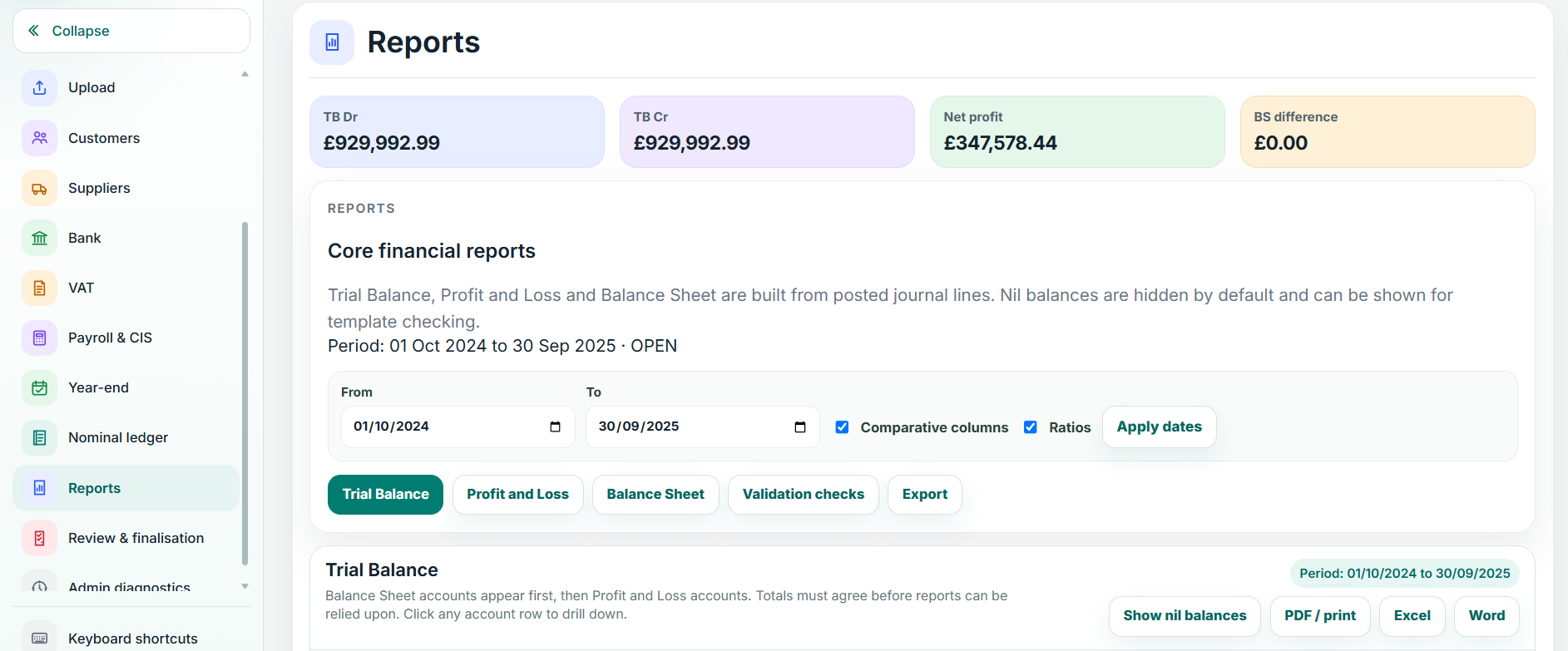
Balansix migration focuses on the information and workflows the firm actually needs to operate safely, with validation before each cohort goes live.
A practice does not need every historic artefact moved into a new platform just to prove it has changed software. Balansix migration starts by deciding what the team actually needs to operate safely from day one and what is better retained in the existing archive.
Map your current systems, client base, services, users and key workflow dependencies.
Set roles, permissions, service structures, practice settings and client workflows.
Bring across the operational and accounting data required for the agreed migration scope.
Check client records, balances and workflow setup before each cohort goes live.
Before moving data, identify which systems currently hold the authoritative client record, recurring work, fees, documents, opening balances, accounting history and final accounts. The objective is to know what must move, what can be re-established cleanly and what should stay available as archive history.

A controlled migration separates data needed to operate the next period from records that can remain available in a read-only archive or legacy system. That keeps the implementation focused and reduces the risk of importing years of clutter simply because it exists.
Bring the identifiers, entity details, key contacts, services and registrations needed by the live practice workflow.
Establish active services, recurring jobs, responsibilities and upcoming deadlines.
Bring a controlled opening trial balance and relevant supporting subledgers for the agreed accounting start point.
Decide which historic documents and completed outputs need to move and which can remain safely archived.

The data needs to reconcile to what the practice expects. Balansix migration should include explicit validation of client counts, opening balances, subledgers, upcoming work and user access before the migrated cohort becomes operational.
A phased rollout can reduce risk and make training more useful. Start with a representative group of clients, validate the live workflow, capture the practice's own implementation decisions and then repeat the process with larger cohorts.
Choose a small but representative client set that tests the workflows the practice uses most often.
Use the pilot to confirm permissions, service setup, naming conventions and internal procedures.
Move further client groups using the validated migration and onboarding process.
Change the platform without losing control of the practice.
Bring a real client workflow to the demonstration and compare how many handoffs, re-keying points and separate systems Balansix can remove.