Built from inside practice. Built by Mr H Hammad FCCA, ACA, ICAEW Chartered Accountant and current CEO of a UK accountancy practice.
ProductFor ClientsWhy BalansixPricingResourcesSupportBook a demoContact
BalansixAI Insights

Turn the accounts into a conversation.

Balansix helps accountants move from accurate figures to clearer explanation, highlighting movements and trends while keeping professional judgement and client advice with the accountant.

Financial snapshotsRatios & trendsAccountant-reviewed insight
Financial snapshot

The client does not need more accounting jargon. They need to understand what changed and why it matters.

Balansix AI Insights takes the financial information already prepared in the platform and turns it into a clearer view of performance and position. The accountant can move from a set of accurate figures to a more useful conversation without starting a new spreadsheet or presentation deck.

The emphasis is not on replacing professional judgement. It is on helping the accountant recognise meaningful movements faster, explain them clearly and spend more of the meeting discussing the business rather than translating the report.

At-a-glance financial position
Performance movements
Profitability and margin indicators
Cash and balance-sheet context
Period-on-period comparisons
Client-ready plain-English explanations
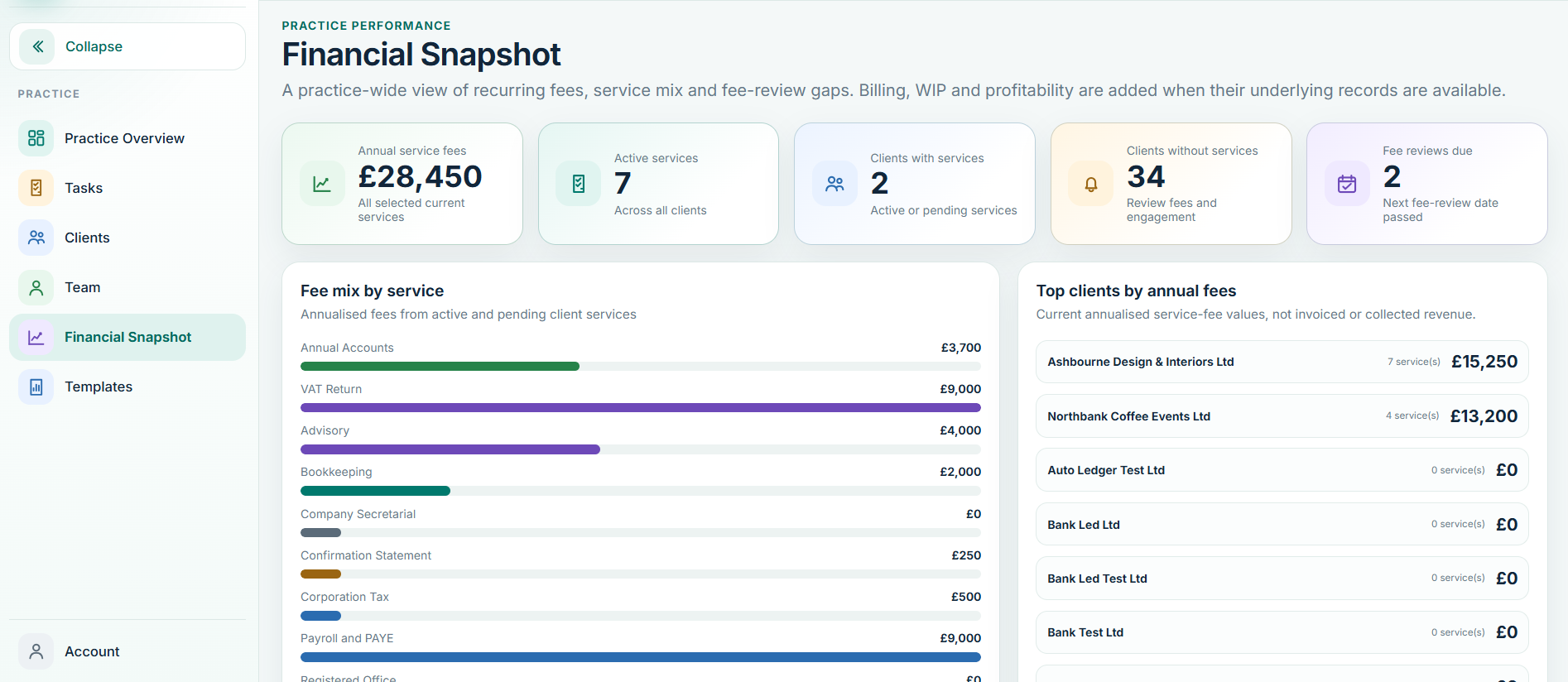
Balansix Financial Snapshot and performance insights
Financial Snapshot • live Balansix screen
Insight, not decoration

Charts are useful when they answer a question.

Balansix uses visual reporting to draw attention to movement, trend and relationship. The purpose is not to turn the accounts into a colourful dashboard for its own sake; it is to help the accountant and client see the story behind the figures faster.

Performance

Compare revenue, gross profit, overheads and operating result across periods and highlight movements worth investigating.

%

Ratios

Use ratios and margins to put absolute figures into context and make deterioration or improvement easier to spot.

Trends

Show whether a change is isolated or part of a pattern so the conversation is based on direction, not a single year-end point.

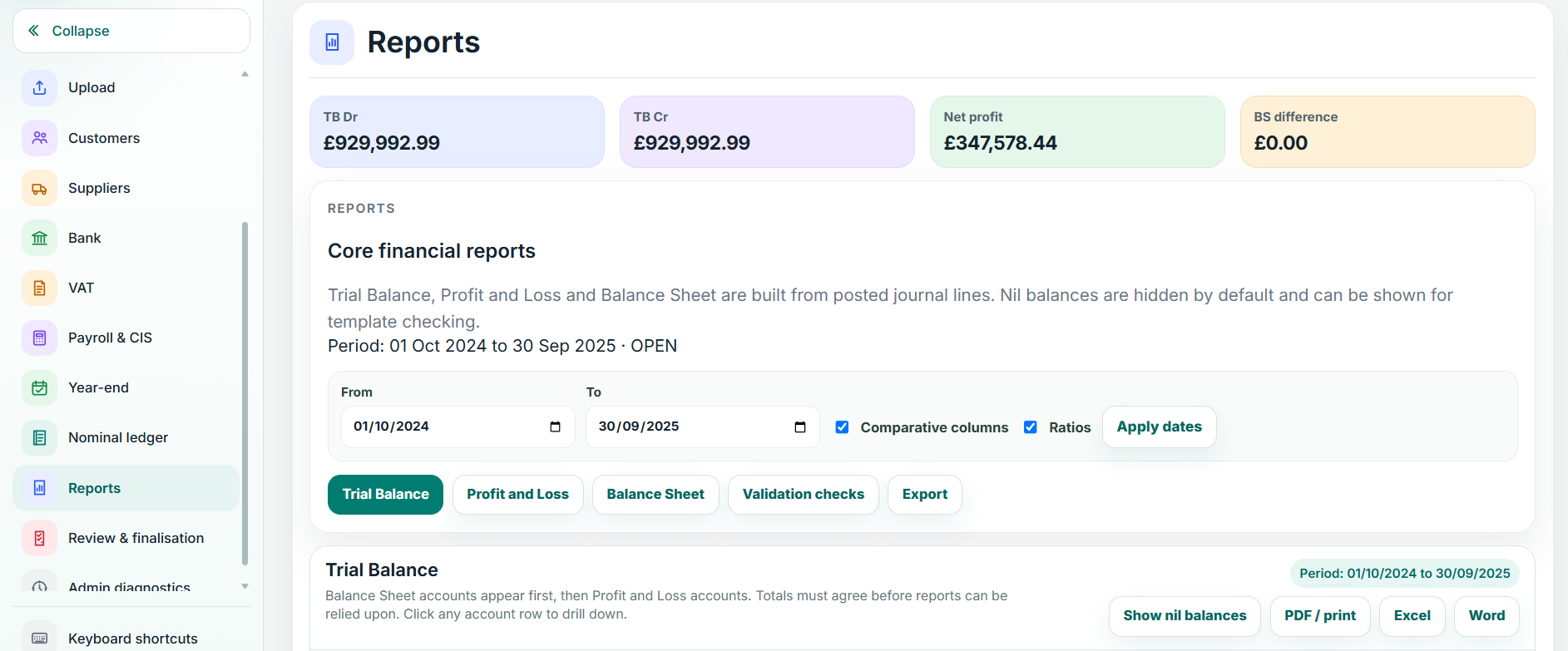
Balansix accounting reports feeding client insight
Underlying reports • live Balansix screen
Connected to the books

The insight should come from the same numbers that produced the accounts.

Balansix does not ask the practice to export a trial balance into a separate advisory product and then reconcile the result. The insight layer is designed to work from the connected financial data already held in the platform.

That makes the advisory workflow more repeatable and reduces the risk that the client is shown a management chart based on figures that no longer match the final accounting position.

Uses connected accounting data
Current and comparative context
Movement explanation grounded in the ledger
No separate re-keying step
Consistent basis between accounts and advisory
Supporting reports available to the accountant
Plain-English explanation

Move from “here are the accounts” to “here is what they are telling us”.

A good client discussion needs interpretation. Balansix can help organise the significant points into understandable language so the accountant starts from a structured analysis rather than a blank page.

Movement

What changed?

Identify the material movements in revenue, margin, overheads, cash, debtors, creditors and other significant balances.

Context

What might explain it?

Bring period comparisons and underlying financial information together so the accountant has the context needed to investigate the movement.

Meaning

Why does it matter?

Turn technical financial movement into practical client language about performance, liquidity, cost pressure or financial position.

Action

What should we discuss next?

Use the insight as a starting point for a professional conversation, with the accountant deciding the advice and next action.

AI with accountant control

AI should make the accountant faster, not make the accountant disappear.

Balansix separates financial calculation and accounting treatment from explanatory assistance. Deterministic accounting logic belongs in the accounting engine. AI is used where it can help summarise, explain, prioritise or draft insight for professional review.

That distinction is important for trust. A client-facing explanation may be assisted by AI, but the underlying accounting figures and schedules should remain traceable to controlled accounting records and coded accounting logic.

Underlying figures remain accounting-system outputs
AI assists explanation and prioritisation
Professional review remains part of the client workflow
Draft insight can be refined before delivery
Source financial reports remain accessible
Clear separation between calculation and commentary
Better advisory starts with less preparation overhead.

If the accountant already has the numbers, movements and first-pass explanation in one place, more clients can receive a useful performance conversation without turning every advisory report into a bespoke spreadsheet project.

See what one connected workflow could remove from your practice.

Bring a real client workflow to the demonstration and compare how many handoffs, re-keying points and separate systems Balansix can remove.