Process the live accounting record with the controls an accountancy practice needs, then carry the same numbers into year end, final accounts and client insight.
Balansix supports two operating modes. Document-Led uses invoices and supporting documents as the primary accounting evidence. Bank-Led uses bank activity as the primary accounting record for suitable cash-based clients. The mode changes the workflow, not the requirement for a controlled, balanced ledger.
Bank data enters a controlled statement workflow. Balansix can maintain opening and closing balance context, identify gaps and overlaps, flag potential duplicates and carry the running balance across work that is waiting to post, posted transactions and the source statement.
The reconciliation is not treated as complete simply because the arithmetic difference happens to be zero. Where statement coverage is incomplete or unresolved issues remain, the workflow keeps that visible.


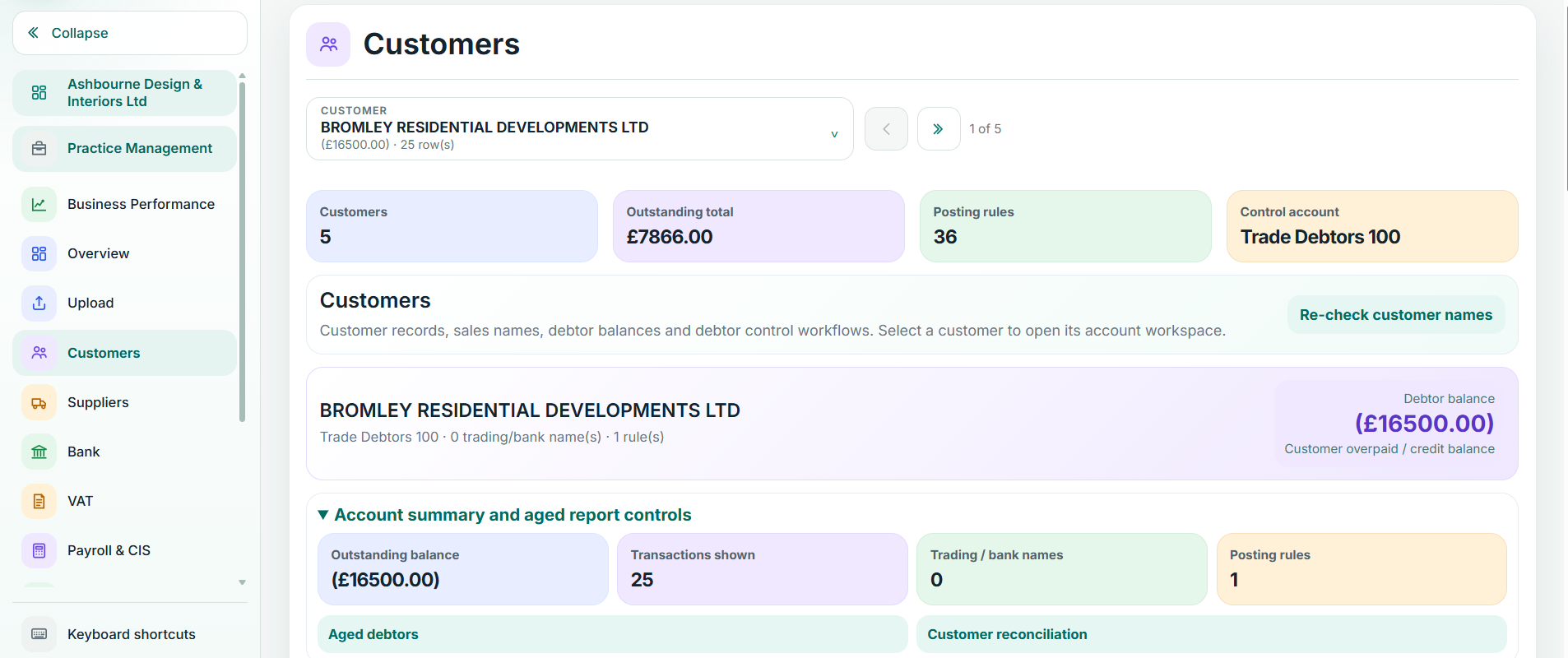
Settlement matching has to cope with how clients and suppliers actually pay. Balansix supports partial allocations, one-to-many and many-to-one matching and grouped settlements so the outstanding position remains intelligible after each allocation.
For Cash Accounting VAT, the settlement matters because VAT is released on the amount actually allocated. The workflow therefore connects allocation with the relevant VAT treatment instead of treating payment matching as a cosmetic ledger exercise.
Balansix is designed around three operating outcomes so staff can focus attention where it adds value instead of reviewing every routine item with equal intensity.
Where evidence, matching and established treatment support a controlled outcome, routine work can proceed automatically.
Borderline, unusual or incomplete items are presented to staff with the relevant evidence and context for a controlled decision.
Where required information or accounting conditions are missing, the system stops rather than creating a plausible-looking answer.
It is to remove repeated processing so the accountant spends more time on exceptions, review and professional judgement.
VAT should not be an afterthought added at reporting time. Balansix carries VAT treatment through the accounting workflow and distinguishes the logic required by Standard and Cash Accounting approaches where they are applicable to the client.
In Document-Led work, invoice evidence and settlement information can support the relevant VAT treatment. In Bank-Led work, the cash-based workflow keeps the bank as the primary record and applies controls around the transactions that drive the return.
The accounting interface is built around preparation, review and completion, including the questions a reviewer asks after the original posting has been made.

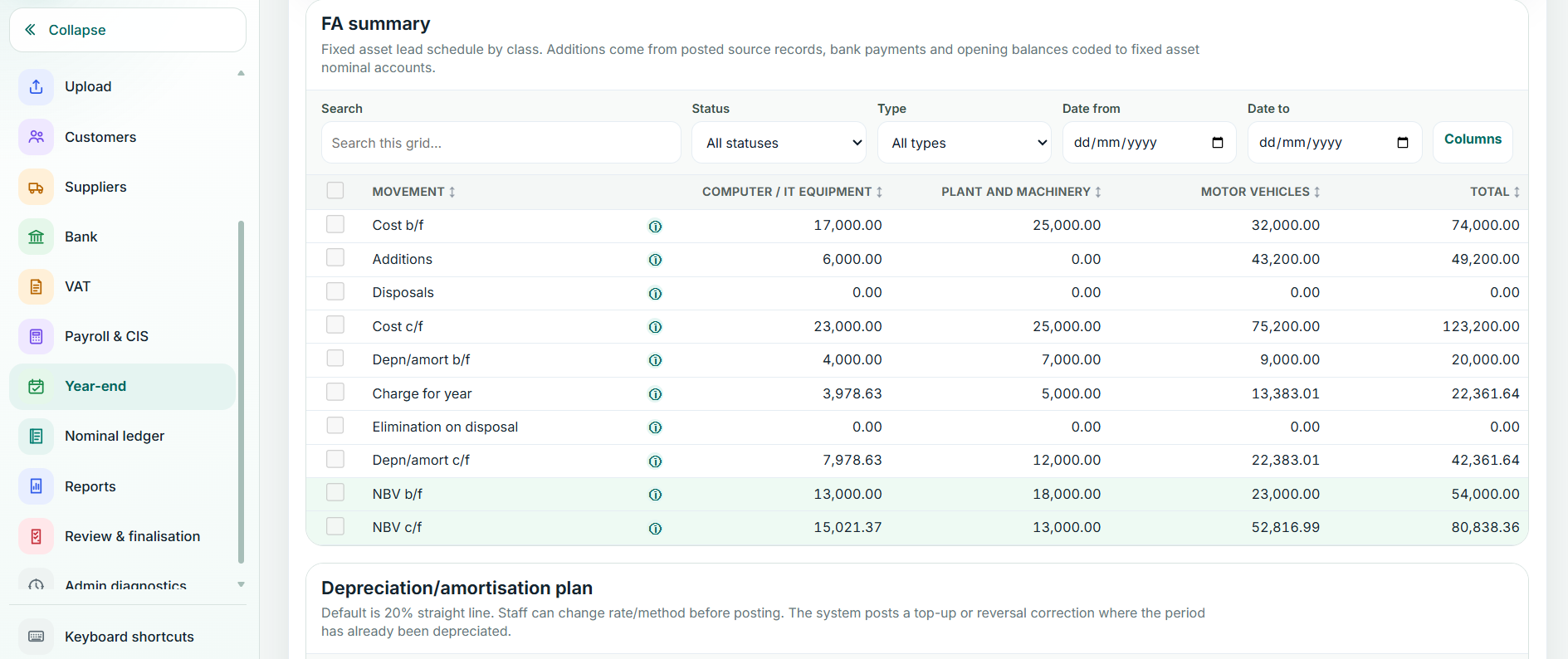
Year-end schedules should not finish with somebody copying a number into a manual journal. Balansix connects supporting calculations with the accounting record so the schedule and the resulting entry stay part of the same controlled workflow.
That changes year end from a reconstruction exercise into a review of work that has already accumulated properly through the accounting period.
Opening balances can be brought in from a balanced trial balance, with supporting subledgers where the control account alone is not enough. The aim is to preserve the detail required to reconcile future movements rather than carrying a single unexplained opening number.
Import or enter opening trial balance information with debit-equals-credit control before it becomes the basis of the live ledger.
Support debtors, creditors, banks, accruals, prepayments and accrued income where the opening control balance requires underlying detail.
Preserve relevant comparative information so current-year financial reports and accounts production have a coherent starting point.
Split opening cash across individual bank accounts so the running bank position begins with the right account-level basis.
Balansix can use recognised supplier context and controlled learning to help suggest likely accounting treatment for familiar, repeatable transactions. Entity-specific rules remain more important than a global suggestion, and unusual or ambiguous items can still be routed to review.
Use known supplier context to reduce repetitive coding decisions for common categories of spend.
Use controlled outcomes from the client to make repeat transactions more efficient while keeping client-specific treatment authoritative.
New, conflicting or unusual information belongs in review rather than being forced through a generic rule.
Payroll and CIS create recurring accounting movements that should not become a detached year-end spreadsheet. Balansix keeps payroll-related accounting and CIS activity within the connected client workflow so the ledger, supporting analysis and year-end position can be reviewed together.
Keep wages, PAYE, National Insurance and related payroll accounting in the ledger through a structured recurring workflow.
Keep CIS-related accounting visible in the same client record and review workflow rather than treating it as an unrelated adjustment.
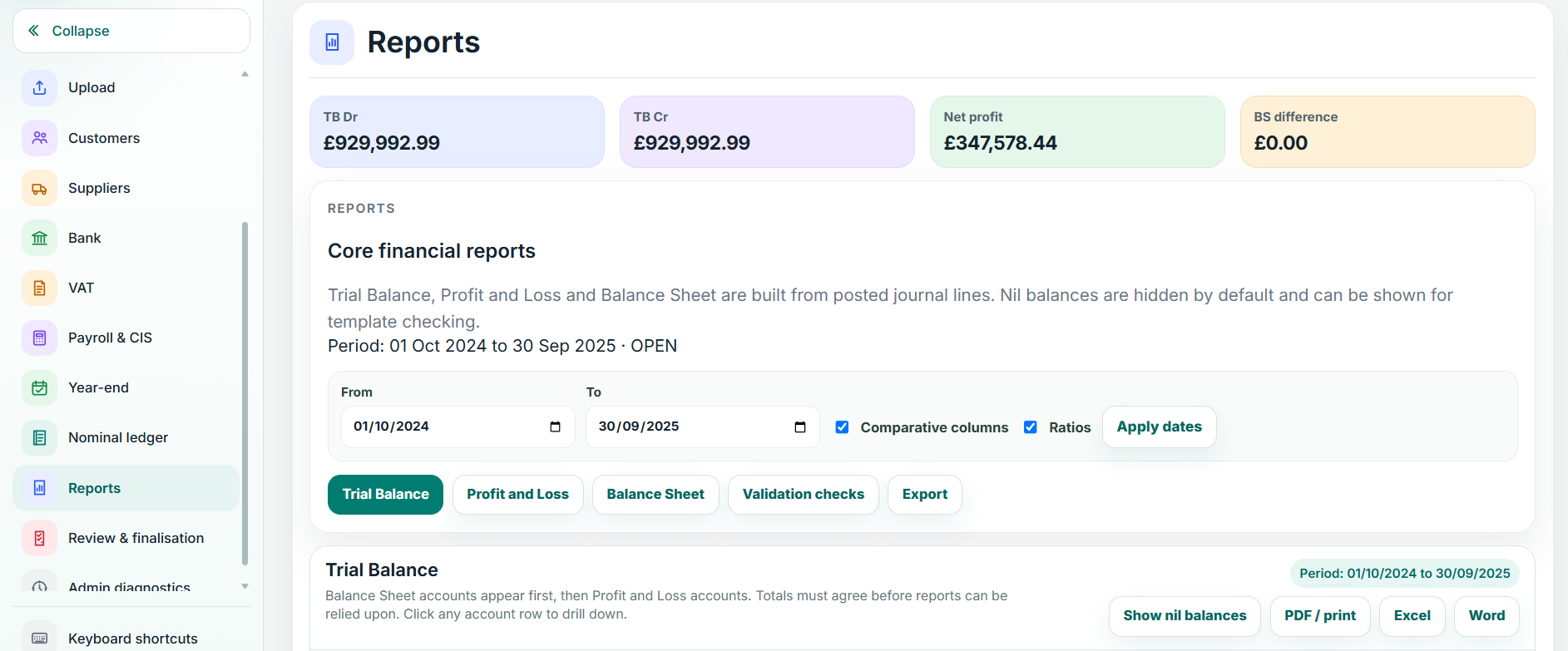
The Trial Balance, Profit & Loss and Balance Sheet are not just outputs. They are review surfaces. Balansix is designed to let staff move from the reported balance back into the underlying account movement and transactions when something needs explanation.

Bring a real client workflow to the demonstration and compare how many handoffs, re-keying points and separate systems Balansix can remove.